Most anglers think any paint works on soft plastics. That’s wrong. Standard spray paint cracks the first time you bend a lure. You need paint that flexes with the material, not against it. So what actually sticks without peeling after a dozen casts?
| Chartreuse Plastisol Colorant for Fishing Lures |  | Professional Grade | Volume: 2 oz | Color Options: Single color (Chartreuse) | Application Method: Dropper bottle | VIEW LATEST PRICE | Read Our Analysis |
| BT Outdoors Professional Plastisol Colorant 2oz |  | Runner-Up Pro | Volume: 2 oz (sold as two 1 oz packs) | Color Options: Single color (Pearl) | Application Method: Dropper bottle | VIEW LATEST PRICE | Read Our Analysis |
| Eupheng Plastisol Colorant Set (6 Colors) |  | Best Value Set | Volume: 1 oz per bottle (6 bottles) | Color Options: 6 natural colors | Application Method: Bottle (unspecified dispenser) | VIEW LATEST PRICE | Read Our Analysis |
| Eupheng Plastisol Colorant Set (6 Colors) |  | Strike Trigger Series | Volume: 1/3 oz per bottle (6 bottles) | Color Options: 6 bright/high-contrast colors | Application Method: Bottle (unspecified dispenser) | VIEW LATEST PRICE | Read Our Analysis |
| Eupheng Plastisol Colorant Set (6 Colors) |  | Best Value Set | Volume: 1 oz per bottle (6 bottles) | Color Options: 6 bright/high-contrast colors | Application Method: Bottle (unspecified dispenser) | VIEW LATEST PRICE | Read Our Analysis |
| White Plastisol Colorant 2oz for Soft Plastic Lures |  | Budget-Friendly Pick | Volume: 2 oz | Color Options: Single color (White) | Application Method: Dropper bottle | VIEW LATEST PRICE | Read Our Analysis |
More Details on Our Top Picks
Chartreuse Plastisol Colorant for Fishing Lures
If you’re crafting custom soft plastics, this chartreuse colorant is your professional grade secret weapon. Just add a few drops from the easy to use dropper into your plastisol before pouring. Want a darker, opaque finish? Add more drops. Prefer a translucent look? Use fewer. It’s oil based, delivering a semi gloss finish that holds up. Rated 4.8 out of 5 stars by fellow anglers, this 2 oz bottle goes a long way. And it’s compatible with other colorants, so you can blend your own signature shades. Circle B Tackle has you covered.
- Volume:2 oz
- Color Options:Single color (Chartreuse)
- Application Method:Dropper bottle
- Finish Type:Semi-gloss
- Heat Stability:Not specified
- Base Composition:Oil-based
- Additional Feature:Easy-to-use dropper design
- Additional Feature:Professional-grade formulation
- Additional Feature:Compatible with all plastisol compounds
BT Outdoors Professional Plastisol Colorant 2oz
This runner-up pro earns its place with a dropper cap that gives you surgical control over color intensity. You’ll add just a few drops to your plastisol for a translucent, shimmery pearl finish. Or you can pour in more for an opaque, fade resistant look that pops underwater. BT Outdoors packs this professional grade colorant in a 2 ounce plug sealed bottle that travels tough. It’s compatible with every plastisol weight and durometer you own.
Key specs for your next pour:
- Volume: 2 fluid ounces
- Finish: Pearlescent, shimmery
- Color code: 0000
- Weight: 2 ounces
Want to experiment? Start with 3 drops per 4 ounces of plastisol. Then adjust from there. You’ll nail custom colors every time!
- Volume:2 oz (sold as two 1 oz packs)
- Color Options:Single color (Pearl)
- Application Method:Dropper bottle
- Finish Type:Shimmery (Pearl)
- Heat Stability:Not specified
- Base Composition:Professional-grade (unspecified base)
- Additional Feature:Shimmery pearl finish
- Additional Feature:Plug-sealed packaging
- Additional Feature:Fade-resistant color code
Eupheng Plastisol Colorant Set (6 Colors)
You’re after a versatile palette without emptying your wallet, and this six color set delivers that value in spades. Eupheng gives you Watermelon Green, Pumpkin Green, Motor Oil, Pearl, Black, and June Bug—colors that mimic baitfish, craws, and insects perfectly for clear, high pressure water. These pigments stay stable during heating, so they won’t separate or fade in your plastisol.
Mix them for custom opacity: add more for opaque baits, or use less for a translucent, lifelike look. Each 1 oz bottle handles hand pouring, laminating, or injecting. Bass, trout, and perch can’t resist the natural movement. And at this price? You’re set.
- Volume:1 oz per bottle (6 bottles)
- Color Options:6 natural colors
- Application Method:Bottle (unspecified dispenser)
- Finish Type:Natural/matte (implied)
- Heat Stability:Heat-resistant, no separation/fading
- Base Composition:Plastisol-friendly pigments
- Additional Feature:Six natural realistic colors
- Additional Feature:Mimics baitfish, craws, insects
- Additional Feature:Hand-pour, laminate, inject compatible
Eupheng Plastisol Colorant Set (6 Colors)
For anglers who want to turn soft plastics into true fish magnets, the Eupheng Plastisol Colorant Set (6 Colors) belongs in your lure-making arsenal, as part of a proven strike trigger series. You get six high contrast colors: Chartreuse, Fluorescent Orange, Fluorescent Pink, Red, White, and Midnight Blue. These colorants stay vibrant during heating, so they won’t separate or fade. That makes them perfect for hand pours, laminates, or injecting worms and swimbaits. Adjust the amount for a translucent look or go opaque with more. And they provoke aggressive strikes from bass, pike, and snakehead, especially in stained or low light. Simple, effective, and reliable.
- Volume:1/3 oz per bottle (6 bottles)
- Color Options:6 bright/high-contrast colors
- Application Method:Bottle (unspecified dispenser)
- Finish Type:Bright/glossy (implied)
- Heat Stability:Heat-resistant, no separation/fading
- Base Composition:Plastisol-friendly pigments
- Additional Feature:High-contrast bright color set
- Additional Feature:Triggers instinctual reaction strikes
- Additional Feature:Ideal for stained water conditions
Eupheng Plastisol Colorant Set (6 Colors)
Anglers chasing pike, catfish, bass, or snakehead in murky water will find their answer here. Eupheng’s Strike Trigger Series gives you six high-contrast colors for maximum visibility: Chartreuse, Fluorescent Orange, Fluorescent Pink, Red, White, and Midnight Blue. You’ll trigger reaction strikes when visibility’s poor, and these pigments are heat-resistant, so they won’t separate or fade during heating. Use them with any standard plastisol base for hand-pours, laminates, or injections. Adjust transparency by adding more or less colorant. Each 1 oz bottle delivers vibrant, stable results for custom soft plastics.
- Volume:1 oz per bottle (6 bottles)
- Color Options:6 bright/high-contrast colors
- Application Method:Bottle (unspecified dispenser)
- Finish Type:Bright/glossy (implied)
- Heat Stability:Heat-resistant, no separation/fading
- Base Composition:Plastisol-friendly pigments
- Additional Feature:Part of Strike Trigger Series
- Additional Feature:Designed for low-light conditions
- Additional Feature:Six bottles at 1 oz each
White Plastisol Colorant 2oz for Soft Plastic Lures
White Plastisol Colorant is our budget-friendly pick for custom lure makers. You get a precise dropper in a 2oz bottle, so you control opacity drop by drop. Want a solid white bait for murky water? Add more colorant. Need a subtle, translucent sheen? Use just a few drops.
- Compatibility: Works with all plastisol types and weights.
- Finish: Semi-gloss, low odor, sealed fresh.
- Mixing: Adjust until you nail that perfect shade.
Plus, it plays nice with other colorants, so you can layer or blend without worry. Circle B Tackle keeps it simple and effective for your custom builds.
- Volume:2 oz
- Color Options:Single color (White)
- Application Method:Dropper bottle
- Finish Type:Semi-gloss
- Heat Stability:Not specified
- Base Composition:Oil-based
- Additional Feature:Low-odor formulation
- Additional Feature:Precisely controlled dropper application
- Additional Feature:White (#FFFFFF) color code
Factors to Consider When Choosing Paint for Soft Plastic Fishing Lures
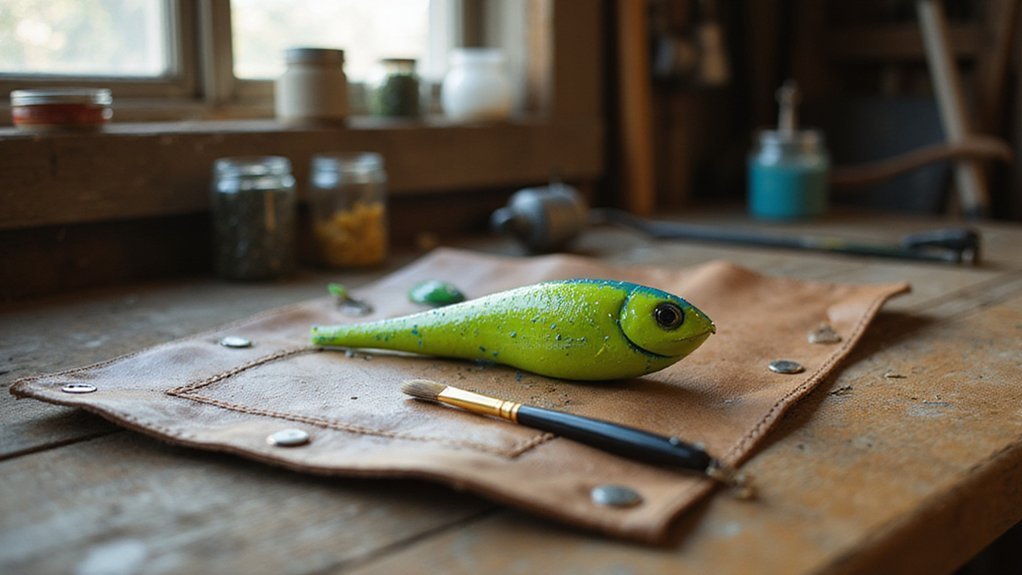
When you’re picking paint for soft plastic lures, you’ve got to check four key things: color consistency, plastisol compatibility, heat stability, and opacity control. Getting the color selection right also matters a lot, because you want the lure to match your target prey. And remember, a paint that can’t handle the heat of the plastic injection process will ruin your whole batch.
Color Consistency
Because color consistency can make or break a lure’s effectiveness, it’s one of the first things you’ll want to lock down when choosing a paint. A uniform appearance isn’t just for looks; it’s critical for attracting fish in specific conditions. Variations in color concentration during production can ruin that, leading to patchy or streaky results that fish ignore.
You’ll avoid this by sticking with high-quality, stable pigments. They hold up through multiple heating and curing cycles without fading or shifting. Proper mixing is key too. You need to evenly disperse the pigment, so you don’t end up with a lure that’s dark on one side and light on the other. Consistent color builds trust with anglers who want professional results. And it boosts your chances of success on the water. So prioritize paints known for their reliable, repeatable color output.
Plastisol Compatibility
Since compatibility issues can ruin a batch of lures, you need to make certain your paint works with every type and weight of plastisol you use. Stick with oil-based or specially formulated plastisol-compatible paints. These maintain flexibility and durability in your finished lure. Avoid paints with harsh solvents or chemicals, as they’ll degrade the plastisol or clog your mixing process.
For best results, choose paints that won’t bleed or separate during heating, keeping your colors vibrant and stable. Not all paints hold up under the heat needed to cure the lure, so pick ones that can take it without fading.
Before you commit to a full run, apply a small sample to a batch of plastisol. This quick check prevents material incompatibility and saves you from wasting time and plastic. Always prioritize compatibility over color alone!
Heat Stability
Heat stability takes over where compatibility leaves off, because even a paint that bonds perfectly with your plastisol will fail if it can’t handle the heat. When you’re melting or curing your lure, temperatures spike, and that’s when a weak pigment breaks down. You’ll see bubbling, discoloration, or even cracking, ruining your work.
But a heat-stable formulation keeps its color and consistency through the whole process, no fading or separating. Look for paints with vibrant, heat-resistant pigments built to handle repeated heating cycles without deterioration. These resist fading from sunlight or water conditions, too, so your lure stays sharp after multiple trips.
Here’s what you gain:
- No bubbling or cracking during the pour.
- Color stays true after curing and exposure.
- Longer lure life through multiple heating cycles.
That’s the kind of durability that turns a good paint into a great one, without surprises.
Opacity Control
Opacity control is your secret weapon for creating lures that perfectly match the look of live bait. You’re adjusting the amount of colorant you add—simple as that. More pigment gives you darker, less transparent lures. Less keeps them translucent or even clear. This precision helps you mimic baitfish or insects, making your lures more irresistible to target species.
But here’s the trick: your colorant must handle heat without separating or fading. Heat stability guarantees your opacity stays consistent during curing. And the colorant needs to be compatible with plastisol. This compatibility guarantees uniform opacity throughout the lure without harming its flexibility. You’ll get the exact look you want every time.
Color Selection
When you’re picking colors for soft plastic lures, you’re fundamentally choosing between two main strategies: mimic natural prey or grab attention with bold contrasts. For stained or low-light water, reach for fluorescent or neon shades they cut through murkiness like a knife. But don’t overlook natural hues like watermelon, pumpkin, or crawfish tones these match specific forage and trigger finicky species. Custom blending lets you create realistic patterns for any scenario. And remember durability matters: choose heat-resistant paints that keep their vibrancy through the molding process. Short version? Go bright for dirty water, natural for clear. You’ll hook more fish when your color choice matches the conditions.
Bottle Design
Since you’re setting up your workspace for soft plastic lure painting, don’t overlook the bottle design it’s a small detail that can make or break your flow. You need a secure, leak-proof cap to prevent a mess during storage or transport. And for precision, look for a dropper or nozzle tip; it lets you apply paint exactly where you want it, cutting waste down to nothing.
Choose bottles made from clear, durable material. That way, you can spot the color and check the paint’s condition without opening the lid. Compact, ergonomic shapes improve your grip, especially when you’re detailing small lure components. And don’t forget refillable options. They save you money over time and keep your setup sustainable. Ignore clunky bottles; they’ll only slow you down.
Finish Quality
The finish quality of your paint is what makes a lure look irresistible to fish, not just flashy. You want a semi-gloss or gloss finish to mimic that shiny, wet look of real bait. It’s a simple trick that boosts underwater appeal. Smooth, consistent application matters too; any lumpiness hurts adhesion and invites chipping. For a truly lifelike appearance, go with a transparent or translucent finish. It lets light pass through dynamically. Opaque paints, on the other hand, give you bold, vivid color pops. Professional-grade paints you buy, not mix, deliver durability and vibrant results that hold up over multiple trips. They resist peeling better, keeping that finish smooth. So pick your sheen, mind the thickness, and let that finish do the talking. Your lure will look like the real deal.
Ease of Mixing
But a flawless finish is only half the battle; getting that paint mixed into your plastisol without frustration is where the real work begins. Look for paints with a smooth, liquid consistency. Thinner blends clump less and streak less, saving you headaches. Pre-dispersed liquid pigments? Grab those. They save you from stirring forever.
- Check consistency: Thinner paints incorporate evenly, reducing lumps.
- Go pre-dispersed: Liquid colorants mix smoothly and quickly.
- Use compatible tools: Droppers or stir sticks make custom colors easy.
Fast drying paints need thorough mixing before you pour. Don’t skip that step. You want uniform color distribution, not blotchy sections. So pick paints that flow easily into your plastisol, and you’ll spend more time pouring and less time fighting lumps.