You’re after a line that stays on top, not one that sinks your chances. A floating line improves cast control and keeps your lure where the fish feed. So, which six lines actually deliver that effortless float without the tangles? Let’s break down the best options, starting with the Piscifun Sword Fly Line.
| Piscifun Sword Fly Line (Weight Forward) |  | Best Long-Cast Performer | Line Type: Weight forward floating fly line | Length: 90-100 feet | Material: Braided core with phthalate-free PVC outer | VIEW LATEST PRICE | Read Our Analysis |
| SF Fly Line for Fly Fishing Weight Forward Floating Fly Line | 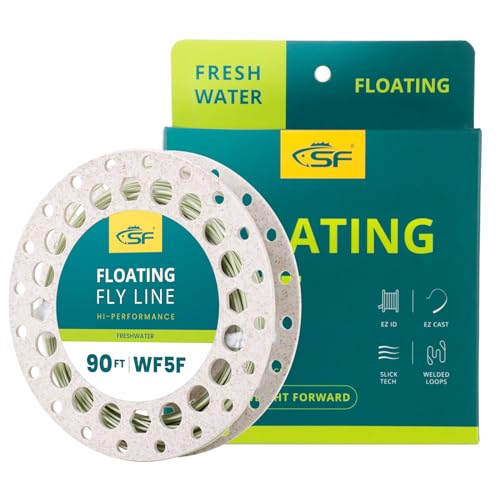 | Most Popular | Line Type: Weight forward floating fly line | Length: 90 feet | Material: Braided PE wireline core with PVC outer | VIEW LATEST PRICE | Read Our Analysis |
| SF Fly Fishing Weight Forward Floating Line |  | Most Versatile | Line Type: Weight forward floating fly line | Length: 100 feet | Material: Polyvinylidene fluoride strand | VIEW LATEST PRICE | Read Our Analysis |
| WUINOID Clear Monofilament Fishing Line Wire |  | Budget-Friendly Pick | Line Type: Clear monofilament nylon fishing line | Length: 755 feet | Material: High-quality nylon monofilament | VIEW LATEST PRICE | Read Our Analysis |
| SF Fly Line for Fly Fishing Weight Forward Floating Fly Line |  | Editor’s Choice | Line Type: Weight forward floating fly line | Length: 90 feet | Material: Woven PE wireline core with PVC outer | VIEW LATEST PRICE | Read Our Analysis |
| KLASIT Fishing Line 788FT,Invisible Monofilament Fishing Wire | 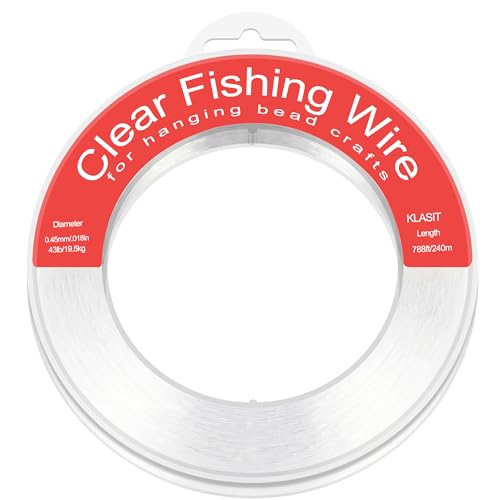 | Best Value | Line Type: Clear monofilament nylon fishing line | Length: 788 feet | Material: Durable nylon monofilament | VIEW LATEST PRICE | Read Our Analysis |
More Details on Our Top Picks
Piscifun Sword Fly Line (Weight Forward)
If you’re after a fly line that delivers effortless distance even when the wind kicks up, the Piscifun Sword Fly Line is your go to. Its longer taper and thicker first 30 33 feet load your leader fast, so you punch through gusts with precision. You’ll love the bright sky blue color for tracking casts, plus that handy “THIS END TO REEL” label saves you fumbling. The braided core resists memory, while the phthalate free PVC outer feels smooth and tough. And the welded loop? It snaps on leaders instantly, transferring energy cleanly.
- Length: 90 100 feet, usually 100.
- Best for: Trout, bass, redfish, salmon, and more.
- Skill level: Beginners to experts.
- Line Type:Weight forward floating fly line
- Length:90-100 feet
- Material:Braided core with phthalate-free PVC outer
- Breaking Strength:Not specified
- Color:Sky blue
- Welded Loops:Yes, single welded loop plus exposed core loops
- Additional Feature:“This End To Reel” label
- Additional Feature:Phthalate-free PVC outer layer
- Additional Feature:Braided core for low memory
SF Fly Line for Fly Fishing Weight Forward Floating Fly Line
The SF Fly Line is most popular for its unbeatable balance of visibility and casting control. That moss green color pops against any water, letting you track your presentation and spot strikes instantly. You get a 90-foot weight forward design with a special taper that cuts through wind like butter, so long casts feel effortless. Both ends come with welded loops, meaning you swap leaders in seconds, no knots required. The braided PE core wrapped in PVC gives you a solid 25-pound breaking strength, so you’re not babying it on big fish. Over 1,300 reviewers agree, rating it 4.6 stars. It’s a best seller for a reason, and you’ll see why on your first cast.
- Line Type:Weight forward floating fly line
- Length:90 feet
- Material:Braided PE wireline core with PVC outer
- Breaking Strength:25 pounds
- Color:Moss green
- Welded Loops:Yes, welded loops at both ends
- Additional Feature:Moss green color
- Additional Feature:Hint label for reel end
- Additional Feature:Woven PE wireline core
SF Fly Fishing Weight Forward Floating Line
This one’s the workhorse of the bunch, and it earns that title by being the most versatile floating line you can spool up. You get a 100-foot weight forward design that handles everything from 3wt to 8wt rods, making it perfect for windy days or calm waters. The double welded loops save you time on rigging, no knots needed.
Pick your color from seven options: Green, Pink, Sky Blue, and more. Bright hues help you spot your line instantly.
- Size options: WF3F through WF8F
- Material: Durable polyvinylidene fluoride strand
- Rating: 4.5 stars from 749 reviews
The economical wrap design lets you replace the line without buying new spools. That’s smart maintenance.
- Line Type:Weight forward floating fly line
- Length:100 feet
- Material:Polyvinylidene fluoride strand
- Breaking Strength:Not specified
- Color:Multiple colors (green, pink, sky blue, moss green, lemon green, mint green, fluo yellow)
- Welded Loops:Yes, double welded loops
- Additional Feature:Economical wrap design
- Additional Feature:Multiple color options available
- Additional Feature:Polyvinylidene fluoride strand
WUINOID Clear Monofilament Fishing Line Wire
Need a fishing line that pulls double duty without breaking the bank? WUINOID’s clear monofilament does just that. You get 230 meters of 0.45 mm diameter nylon strand, good for landing fish up to 24.5 pounds, yet still strong enough to hold balloon arches or craft garlands weighing as much as 17.2 pounds. Its transparency makes it nearly invisible in water, plus it resists tangling for smoother casting. Wrapped on a handy plastic spool, this line keeps your projects neat. With over 1,800 reviews averaging 4.8 stars, it earns its keep. And honestly, you won’t find a better deal for both fishing and decorating.
- Line Type:Clear monofilament nylon fishing line
- Length:755 feet
- Material:High-quality nylon monofilament
- Breaking Strength:24.5 pounds
- Color:Clear/transparent
- Welded Loops:No
- Additional Feature:Tangle-resistant operation
- Additional Feature:Nylon invisible string
- Additional Feature:Suitable for crafts/decorations
SF Fly Line for Fly Fishing Weight Forward Floating Fly Line
For anglers who demand effortless casting in windy conditions, the SF Fly Line earns our editor’s choice. You’ll love its 90-foot WF5F design, sky blue color standing out against dark or bright water. Welded loops at both ends, plus a “This End To Rell” label, make leader swaps a breeze. The special taper and core formulations give you precise, accurate casts even when gusts pick up. A woven PE core with PVC outer layer boosts strength and durability. You get smooth, long-range projection with slick tech that reduces friction. Over 1,300 reviewers rate it 4.6 stars. That’s reliability you can count on.
- Line Type:Weight forward floating fly line
- Length:90 feet
- Material:Woven PE wireline core with PVC outer
- Breaking Strength:Not specified
- Color:Sky blue
- Welded Loops:Yes, welded loops at both ends
- Additional Feature:“This End To Rell” label
- Additional Feature:Slick tech reduces friction
- Additional Feature:Woven PE wireline core
KLASIT Fishing Line 788FT,Invisible Monofilament Fishing Wire
You’re a crafty angler or a party planner who needs a line that’s both strong and nearly invisible. KLASIT Fishing Line 788FT delivers exactly that. This clear monofilament nylon wire handles up to 43 pounds of force while staying practically unseen in water, so fish won’t spook easily. At 0.45 mm thick and 788 feet long, you’ve got plenty of slack for rigs or hanging decorations.
But don’t stop at fishing. Use it to suspend photo frames, string lights, or paper lanterns without visual clutter. The sturdy plastic spool keeps tangles at bay, and cutting is a breeze. A single spool covers serious ground, whether you’re tying knots or crafting holiday magic. It’s reliable, versatile, and quietly impressive.
- Line Type:Clear monofilament nylon fishing line
- Length:788 feet
- Material:Durable nylon monofilament
- Breaking Strength:43 pounds
- Color:Clear
- Welded Loops:No
- Additional Feature:Supports up to 43 lbs
- Additional Feature:Suitable for DIY crafts
- Additional Feature:Sturdy plastic spool dispenser
Factors to Consider When Choosing Fishing Line for Float Fishing
Before you settle on any line, you’ll want to weigh a few key factors that can make or break your float setup. Tensile strength matters for fighting bigger fish without snapping, but you also need to balance that with line visibility since a thick, dark line can spook wary fish in clear water. Don’t overlook abrasion resistance for those snaggy spots, and pay attention to knot strength, because even the best floating line is useless if the knot slips at the hook.
Tensile Strength
One of the most critical specs you’ll consider is tensile strength, which tells you the maximum force your line can handle before snapping. You need this to land bigger, harder fighting fish without breakage. Higher pound test ratings give you more muscle, but remember this: thicker line offers greater strength, but it also reduces flexibility and can hurt your bait’s natural presentation. So, you’ve got to balance the two. Pick a line that matches the species you’re after, not the heaviest you can find. Overdoing it just invites breakage at the worst moment, like during a long cast or a snag. Stick with a tensile strength that handles the fight without compromising your float’s drift. That’s your sweet spot.
Line Visibility
Now that you’ve got your tensile strength dialed in, it’s time to think about how well you can actually see your line. That’s where line visibility makes or breaks your float fishing game. Go with a brightly colored line, like sky blue or moss green, to easily monitor every twitch and movement. High-visibility lines let you detect subtle bites you’d otherwise miss, so you’ll strike faster and hook more.
But don’t ignore clear lines for stealth. In clear water, a transparent line disappears underwater, giving you a natural presentation spooky fish won’t flee from. The trick? Match your line color to contrast with the water around you. For example, use a bright line against dark water, or a clear line in gin-clear lakes. This boosts your casting accuracy and line control, making every cast count.
Abrasion Resistance
Since you’re fishing around rocks, branches, or rough underwater structures, abrasion resistance becomes a non-negotiable factor—you don’t want your line snapping on a hidden snag when a fish finally bites. Monofilament typically shines here, outperforming braid when scraping against jagged edges or coarse gravel. You’ll notice fewer nicks and cuts, which means fewer heartbreaking break-offs mid-fight.
Think about targeting pike or bass with sharp teeth; a tougher line saves your rig and your temper. Rough retrieval over submerged timber? No problem. A line with solid abrasion resistance holds up to friction, scratches, and constant contact, so you’re not respooling every trip. That durability translates directly into confidence—you can work tight cover aggressively without flinching. For float fishing, where line often drags along bottom structure, you want that buffer. Pick a line that shrugs off abuse, and you’ll hook more while worrying less.
Weight Forward Design
Abrasion resistance is your shield against rough cover, but weight forward design is your launchpad for reaching that cover in the first place. This line’s denser front section delivers longer, more precise casts, cutting through wind like a dart. You’ll load the rod with less effort, sending bait far beyond the shoreline. That’s key when species hold deep or distant.
The tapered front boosts accuracy, so you drop your float exactly where you want it, even in a breeze. Plus, it covers large distances quickly, saving you time and energy. Perfect for targeting those far-off fish. You get pinpoint placement without the extra strain. It’s a game changer for float fishing, letting you focus on the strike, not the cast.
Knot Strength
Tie a knot, and you’ve created the weakest link in your setup—unless you choose a line that holds strong under pressure. Knot strength measures how much holding power your line keeps after you tie it. Higher knot strength means less risk of breakage during casting or fighting a fish. The knot you use matters too. Some knots preserve more of the line’s original strength, so always match your knot to the line type.
Monofilament lines generally have lower knot strength than braided lines, which retain more strength after tying. That’s a critical factor when you’re targeting species that put up strong fights or when using lighter gauges. Don’t let a weak knot cost you the catch. Choose a line that keeps its strength where it counts.
Line Diameter
Knot strength matters, but once you’ve got your line tied securely, the next thing you’ll notice is how it behaves in the water. That’s where line diameter steps in, and it’s a big deal for float fishing. Thinner lines, think 0.15mm to 0.25mm, cut through water with less resistance, giving you a more sensitive, subtle feel when a fish barely taps your bait. You’ll cast farther and more accurately with lighter diameters, too. Thicker lines offer extra strength and durability, but they’re more visible and won’t drift as naturally. So, you’ve got to balance stealth, strength, and casting performance for your specific spot. A smaller diameter means less water resistance and better bite detection plain and simple. Choose wisely, and your float will behave just like you want it to.
Floating Properties
Why does a line that stays on top matter so much for float fishing? It’s simple: without buoyancy, your presentation sinks before it starts. You need a line that refuses to dip, keeping your bait where the fish feed. That buoyancy comes from both the material composition and the taper design. Specialized coatings, like PVC or other buoyant layers, lock in that surface float. A weight forward design helps too, maintaining buoyancy while you cast long distances.
Here’s what to look for in floating properties:
- High visibility colors like bright orange or chartreuse for easy line tracking.
- A buoyant outer coating that prevents waterlogging.
- A weight forward taper to aid casting without sinking.
Simple stuff, but it makes all the difference when you’re aiming for that perfect drift.
Core Material
Since the floating properties we just covered keep your line on the surface, the core material is what actually gives it the backbone—strength, flexibility, and durability for the fight. For float fishing, you’ve got two main options. Braided cores offer higher sensitivity and less stretch, giving you precise control for long distance casts, plus you feel every subtle nibble. Monofilament cores, on the other hand, stretch more, which absorbs shock when a fish makes a run, reducing breakage risks. Your choice also depends on environment. Saltwater? Go for braid’s abrasion resistance. Freshwater? Mono’s versatility shines. Modern advances like multi-filament braids and coated monofilaments boost knot strength too. So pick based on your target species and water conditions, not just price. That’s the real backbone of your setup!