You probably don’t realize that a spinnerbait’s color does more than look good; it sends a critical vibration and flash signature through the water. That signal either triggers a bass’s predatory instinct or gets completely ignored. So, choosing the right hue becomes your biggest advantage, not just an afterthought. Let’s break down the ten shades that consistently seal the deal.
Strike King Potbelly
https://m.media-amazon.com/images/I/61Gc16wD+DS._AC_SX679_.jpg
The Strike King Potbelly is perfect for you if you want a proven tournament winner. It weighs 3/8 oz and pairs a Colorado blade with a Willow for that classic, flashy thump that calls in bass from a distance. You’re targeting largemouth, smallmouth, or spotted bass with its flat point design.
Why do anglers love it? Check the numbers:
- 4.6 stars from 323 reviews.
- Safety pin hook keeps fish pinned.
- Quality components you can trust.
You get a single, high performance lure. No warranty, but you won’t need one. It’s a Strike King. Just tie it on and cast.
Factors to Consider When Choosing Color Spinnerbait for Bass
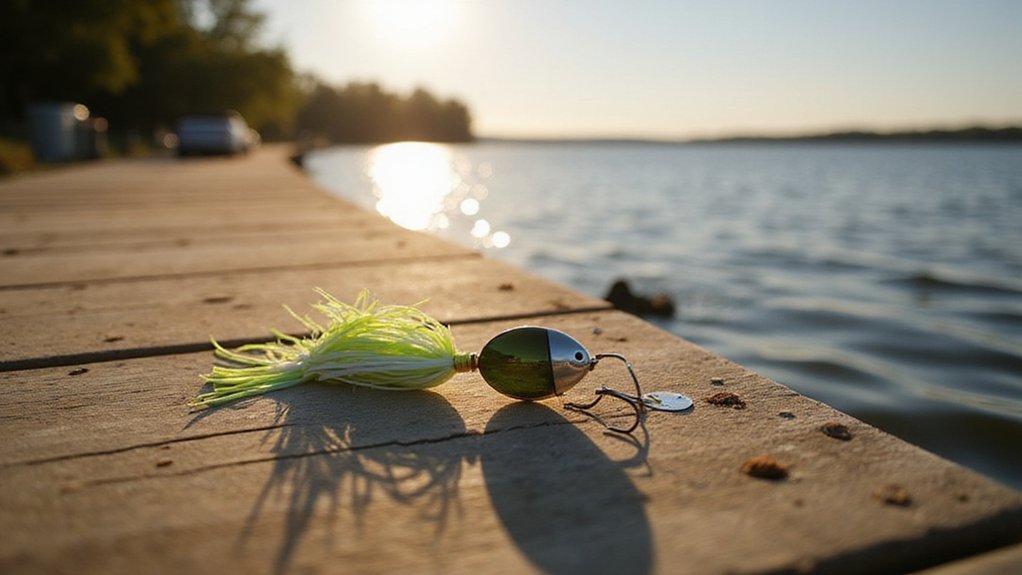
You’ve got to match your spinnerbait color to the water clarity first, because muddy water demands bright chartreuse while clear water calls for natural shad tones. Then consider sunlight penetration: on a bright day, flashy metallics work wonders, but in low light, you’ll want dark silhouettes like black or blue. And don’t forget seasonal prey shifts and water depth, as bass key in on specific forage colors and need high contrast in deeper water.
Water Clarity Conditions
Because water clarity changes everything about how a bass sees your spinnerbait, you’ve got to match your color choice to what’s happening below the surface. In clear water, stick with natural shad or minnow patterns. These mimic what bass are already feeding on, so they trigger strikes without looking suspicious. When the water gets stained or muddy, you need to switch gears. Go with brighter colors, like Chartreuse, to cut through the murk. For slightly stained water, translucent or metallic finishes work best. They reflect light without overexposing the lure. And in heavily turbid conditions, don’t just think about color. Opt for spinnerbaits with larger, more reflective blades. That extra flash and vibration helps bass locate your bait fast. Adjusting your color this way boosts your odds of getting bit.
Sunlight Penetration Levels
When sunlight punches through clear water, it completely changes how bass perceive your spinnerbait. Those bright, vibrant hues like chartreuse or white really pop, so you’ll want metallic blades to maximize flash and trigger a strike. But when overcast skies or deep water dim the light, you need a different approach. Darker or matte-colored spinnerbaits create a stronger silhouette, helping bass track your lure against the muted background.
- High sunlight: Go for reflective blades and bright colors.
- Low sunlight: Choose matte finishes and darker hues.
The depth matters too. Shallow water bathed in sun calls for natural tones, while deeper or stained water demands fluorescent colors that cut through the gloom. Adjust your pick based on how much light actually reaches the fish, and you’ll match their visual conditions perfectly.
Prey Forage Matching
Matching your spinnerbait’s color to the local forage is the quickest way to get bass to commit. You’re fundamentally offering them a familiar meal, so study what’s swimming nearby. If shad dominate, grab a silver or white blade. For crawfish-heavy lakes, switch to a brown or orange combination. In stained water, though, you’ll need brighter contrasts like chartreuse to help bass see your bait. Consider these forage matches:
- Shad: white, silver, or pearl.
- Minnows: bluegill, green pumpkin.
- Crawfish: red, orange, brown.
- Insects: black or dark brown.
And don’t be afraid to adjust based on the moment. Bass focus on specific prey as seasons change, so a quick color swap can turn a day of follow-ups into a day of strikes.
Seasonal Patterns Shift
As the seasons cycle, bass shift their feeding patterns dramatically, and your spinnerbait color should shift right along with them. In spring and early summer, when forage is abundant, natural and brighter colors like chartreuse and white attract bass effectively. Late summer and fall call for darker, more muted tones like black or brown, matching lower light and fallen leaves. Winter demands subtle colors like copper or silver, resembling natural prey in cold, deeper water. Understanding seasonal water clarity helps you match baitfish colors perfectly. Remember:
- Spring/early summer: Bright colors (chartreuse, white)
- Late summer/fall: Darker tones (black, brown)
- Winter: Subtle hues (copper, silver)
Shift your spinnerbait with the seasons, and you’ll keep bass striking all year long!
Water Depth Influence
How deep are you fishing? That’s your first clue for spinnerbait color. In shallow water, where sunlight blasts through, natural and brighter colors work best. They mimic prey and grab attention fast.
But drop below five feet, and the game changes. Light fades, and so does red. Darker hues like black, blue, or purple hold their visibility better here. For murky or stained depths, high-contrast colors become your best friend. They cut through the gloom, making bass notice your bait.
Contrast Against Background
Next, think about contrast against the background. You want your spinnerbait to scream “look at me,” not blend into the scenery. In muddy or stained water, grab bright and vibrant colors like chartreuse or white. They pop hard against the gloom, making bass notice from a distance. But for clear water, switch it up. Darker colors—think black or blue—create contrast against the lighter underwater surroundings. This visual edge triggers more strikes. The key is understanding your local water’s typical background. High contrast is essential in low-visibility murk. Match your color selection to the environment:
- Muddy water: go bright (chartreuse, white)
- Clear water: go dark (black, blue)
Simple adjustments like these make your bait impossible for bass to ignore.